It's time to rebuild the Earth's biosphere—one landscape at a time.
By connecting communities, restoring the ecosystems that sustain us, and strengthening local economies,
we can create lasting change through policies that make landscapes more inclusive, resilient, and productive.
From local action to global impact, welcome to GALLOP Initiative.
GALLOP helps develop Integrated Landscape Management (ILM) policy approaches to align governments, communities, and capital around a shared vision of regenerative land use towards Net Zero — from India to the world.
GALLOP was founded in 2020 to help build the institutional and financial bridge that turns landscape restoration into a driver of rural prosperity, climate resilience, and inclusive growth — working from state, to national to a global stage.
The Global Livelihoods and Landscape Recovery Platform (GALLOP) is an Integrated Landscape Management (ILM) policy think tank working to craft a holistic policy vision for ILM and drive policy reform for Governments. GALLOP advances policies that promote sustainability at the ground level through UNCCD's ILM practices.
GALLOP's policy approach focuses on addressing decarbonisation across landscapes, communities, livelihoods, and farm-related industries. By leveraging blended finance mechanisms and Carbon Markets, we support SDG and NDC achievements while ensuring a net gain to GDP. GALLOP champions a federal and state actions to integrate Agri-Horti-Forestry and land restoration as the entry points for rolling out ILM nationwide.
Since 2020, GALLOP has collaborated with partners globally to establish baselines and review on-the-ground strategies. We have advanced from concept to active policy engagement — working with the Goverment Of India, and the Head of Departments at IIT Bombay, and IISc Bangalore as advisors — building a coalition across government, academia, and civil society organizations toward a durable landscape governance architecture nationally.
The economy is embedded in the biosphere, not external to it.
Source: Adapted from Dasgupta, P. (2021), The Economics of Biodiversity: The Dasgupta Review. HM Treasury. Open Government Licence v3.0. Graphic: Stockholm Resilience Centre.
Credit: Stockholm Resilience Institute
"Nurturing whole landscapes yields high returns: a thriving economy, human well-being, healthy nature and inspiration for a better future."
GALLOP - 1000 Landscapes Policy Vision, 2025
Crises are mounting and converging — from slowing economic growth, food and water insecurity and rising unemployment, to deepening inequality, climate impacts, and environmental degradation. The renowned 2021 Dasgupta Review demonstrated that an economy is embedded in its living ecosystems. Yet too many countries continue to apply fragmented approaches that ignore this reality.
By embracing the interconnections between economic, environmental, and social dimensions at the level of the local landscape, bioregion, or territory, leaders can unleash the power to transform such places into engines of renewal that drive sustainable, long-term economic development. ILM promises to be one of the most efficient and effective ways to address the polycrisis.
Community-led, integrated landscape management can unlock systemic solutions from the ground up — mobilising local knowledge, stewardship, and collective action that top-down programmes cannot replicate.
Governments can strategically deploy existing public budgets towards convergence on the ground, supporting local action plans directly. Aligning public investments makes funds work harder while rebuilding community trust.
Public policies and budgets serve as a foundation for comprehensive, unified solutions — attracting aligned private and philanthropic capital to amplify local solutions to the polycrisis at landscape scale.
Dedicated Landscape Agency within government to serve landscape partnerships (LPs) and advise public and civil society policies and programmes.
Aligned Government Policies, Programmes and Budgets that support LP-generated action and investment plans at the landscape level.
Society-wide Mobilisation for landscape strategies, including markets, finance, digital infrastructure and education.
GALLOP approach helps build the institutional and financial bridge that can turn landscape restoration into a driver of rural prosperity, climate resilience, and inclusive growth. We aim to enable systems that support Civil Society Organizations (CSO / NGO) and communities in implementing landscape restoration and regenerative programs. We do this by fostering policy coherence to align public finance, supporting bottom-up vision and action by local stakeholders, and helping channel private investment into landscapes.
Driving federal and state-level policy development for land restoration — including the National Green Transition of Land and Agri-Horti-Forestry integration missions with the Government.
A phased roadmap — from state-level demonstration through institutionalisation and market readiness to national and international replication — building durable landscape governance architecture.
Connecting ecological restoration to rural income, multi-stakeholder and community-led governance with full inclusion and co-leadership and stewardship with women — so landscapes become engines of inclusive, climate-resilient growth for 1 billion people.
Building blended finance pathways that include collaborative governance across regional public schemes — aligning CSR, business & private sector, philanthropic, multilateral, and nature-based investment frameworks toward SDG and NDC goals.
This approach has the potential to create an unprecedented decarbonisation ecosystem that generates employment and livelihoods nationwide — adding billions annually to GDP.
GALLOP Briefs to the highest levels of Government.A patient, phased approach — from policy demonstration to national public infrastructure. Each phase unlocks the next, crowding in government, multilateral, and private capital over time.
State-level Landscape Policy Labs established. Institutional awareness and sectoral alignment initiated. ILM moves from concept to governance pathway, anchored at IIT Bombay's Economic Centre of Excellence.
ILM embedded in state planning processes. Coordination mechanisms and state capacity strengthened. Landscape thinking enters mainstream development planning across ministries.
Investment-linked restoration enabled through Carbon Markets. Livelihoods aligned with climate action. Restoration begins generating measurable economic value and attracting private capital.
Models expanded across states. National learning platforms and policy blueprints established. Landscape governance becomes scalable and replicable across geographies.
Integration across state and central governments. India becomes a globally pioneering model for landscape-led development. Learnings disseminated internationally through global ILM networks.

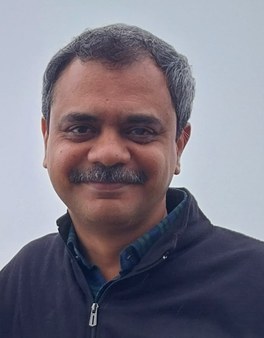
Founder of the GALLOP Initiaive and driving force behind ILM policy vision for a better Economy-GDP, SDGs & NDCs agenda since 2020. GALLOP is working towards National Green Transition of Land, and leading a global ILM vision paper for policymakers.

CEO & Co-Founder of Medius Earth, a land restoration and carbon project developer translating GALLOP's policy vision into on-the-ground implementation. Leads blended finance structuring, Carbon Market engagement, and project development.

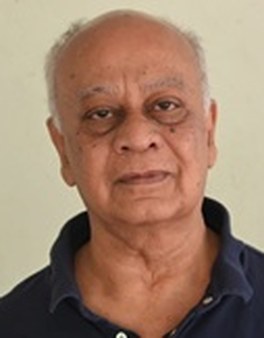
As a teacher, professor and principal to a leading educational institution provinding life time of service to society, community and guiding institution building, has over decades helped shaped what is now the GALLOP Inititive, championing the need for biodiversity resilience, societal wellness and sustaible economic develoment.

A prominent non-profit organization based in Udaipur, Rajasthan, founded in 1968 by Dr. Mohan Sinha Mehta. It works with rural and urban communities across 1800 village to address poverty, health, education, and natural resource management through participatory, sustainable, and democratic practices.

With over 120 CSO and individual members country wide, the Fair Climate Network (FCN) is an open network of grassroots NGOs, environmentalists, and professionals established in 2007. It enables rural poor communities to access carbon finance by developing pro-poor Clean Development Mechanism (CDM) and Voluntary Carbon Market projects, including biogas, cookstoves, solar lamps, and low-carbon farming. alignment work, and carbon sequestration modelling.

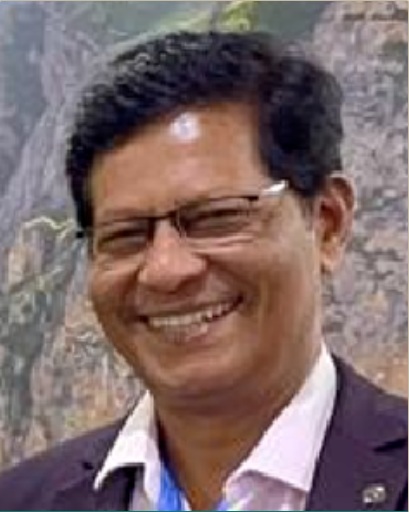
Jagdeesh is leading the Common Ground initiative, as CEO of Living Landscapes and promoting systems leadership for environmental governance and resilient rural livelihoods. A practitioner, his entire professional life has been centered around furthering judicious management of natural resources, with community institutions playing a central role. Common Ground is collaborative systems change initiative in the domain of environmental governance and rural livelihoods in India, jointly led by several organisations and anchored Living Landscapes.

BAIF (formerly Bharatiya Agro Industries Foundation) is a prominent non-governmental organization (NGO) established in 1967 by Dr. Manibhai Desai to promote sustainable rural livelihoods. It focuses on enhancing rural life through livestock development, climate-resilient agriculture, water management, and women's empowerment across the country. BAIF operates in 18 states and helps communities generate over 25,000 crore in livelihoods.

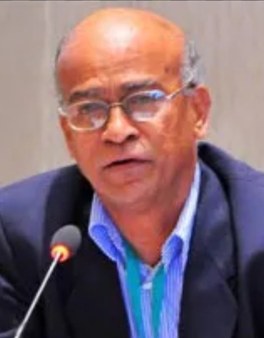
Professor and HoD of Economics at IIT Bombay, anchoring the Economic Research that underpins GALLOP's quantitative case — including GDP contribution analysis, economics of land restoration, Climate change and co-benefits.

Distinguished climate and forestry expert at IISc Bangalore. Member of the UNCCD Technical Panel and IPCC contributor, bringing global scientific credibility to GALLOP's ecological frameworks, NDC alignment work, and carbon sequestration modelling.

Dr. Sara Scherr is a global leader advancing regeneration of landscapes. She co-founded and chaired 1000 Landscapes for 1 Billion People (2019–2024) and remains active in its finance working group and leading its research working group. She is Editor-in-Chief of the new CABI Multifunctional Landscapes journal. She founded EcoAgriculture Partners, and co-founded Landscapes for People, Food, and Nature.

The Centre for Sustainable Development (CSD) at Gokhale Institute of Politics and Economics (GIPE), Pune, is a dedicated policy research and advocacy center formed on January 1, 2023. It focuses on socio-ecological issues, sustainable pathways, and climate action, promoting economic development through applied research to achieve UN-SDGs.
Co-authored by Bhushan H. Sethi and Dr Sara J. Scherr. Argues that ILM can play a far more significant role in building regenerative economies while addressing today's interconnected polycrisis. Policy leadership is critical to enabling this shift; the paper lays out key elements for robust policy action. The summary was released in November 2025; launched at UNFCCC COP30 side event, Brazil — Connecting the Rio Conventions through Landscape Action: Governance and Finance in Practice.
↗2-page summary of the flagship paper, launched at UNFCCC COP30 Brazil as part of the 1000L side event. Available in four languages for broad global dissemination.
↗Submitted April 2026 to the Chairman, Economic Advisory Council to the Prime Minister. Presents the decarbonisation ecosystem case, upto $130bn GDP opportunity, and the framework for a National Green Transition of Land.
Submitted alongside the PM-EAC brief. Outlines on-the-ground strategies developed through multi-year collaboration with partners across India, including baseline assessments and anticipated co-benefits.
↗Documentation and outcomes of the 1000 Landscapes side event at UNFCCC COP30, Belém, Brazil — Governance and Finance in Practice.
↗Sets out the strategic vision and policy architecture for a National Green Transition of Land — including the Agri-Horti-Forestry integration mission and blended finance framework.
Complete White Paper launched with panel from USDA and GEF. Authors EcoAgriculture Partners, Cornell University, GALLOP, Columbia University. Launched on the Evedencia Platform.
↗We are building the enabling infrastructure for India's landscape transition and beyond — and looking for partners who think in decades. Whether you represent government, philanthropy, academic institutions, or the private sector, there is a meaningful role for you.
Get in TouchChief Executive Officer, Medius Earth — Project enquiries, Carbon Markets & Land Restoration
contact@mediusearth.comEngage on ILM policy frameworks, state-level labs, and federal mission design
Explore catalytic, long-horizon funding opportunities in India's landscape economy
Collaborate on ILM economic modelling, policy design, and ecological frameworks
Invest in land restoration and Indian Carbon Market opportunities via Medius Earth